
Finances might seem very logical. Build a budget. Pay the bills. But emotions are very much entwined with money. Understanding this can mean the difference between money controlling you and you controlling your money.
Money = Emotion
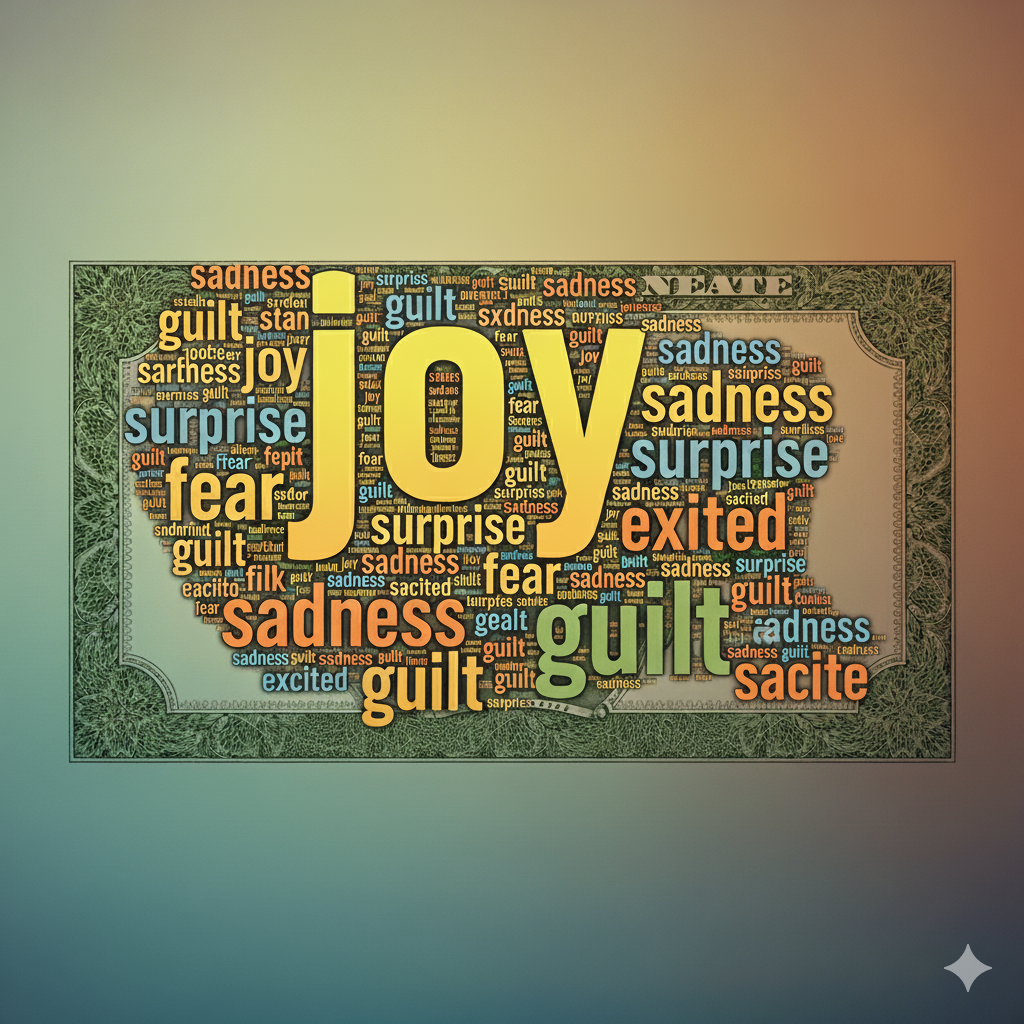 As an example of the emotional effect of money, you may have felt excited or elated when receiving an unexpected bonus. Likewise, you might have a feeling of dread or anxiety if an unexpected bill arrives. Think back to a large purchase you made. What emotion drove that decision? When I purchase new tech gadgets, I have lots of feelings. Did I spend too much? Do I really want it? The excitement of learning all the features. These feelings are all ways that our emotions and money are connected.
If you are a retiree who tended to save money rather than spend it, consider the emotions you went through when you changed from saving your nest egg to starting to spend from it. Was that a hard transition to make emotionally?
How we feel about money drives our behavior. Someone who needs to feel important may spend on luxury items for the feeling of status or to keep up with others. Another might fear job loss or an insecure future, living like a miser and saving almost everything. A third might experience guilt after an impulsive purchase. A fourth might feel shame for having so much debt.
Recognizing The Emotions Associated With Money
The result of allowing these emotions to affect purchases is that money drives you. Having it (or not having it) makes you act a certain way. If you want to control your money, it will require identifying these emotions and influences, both internal and external.
Internally, you may spend money for the short-term satisfaction it gives. I enjoy going to Home Depot and coming home with something because it becomes a present to myself. Something new to spend time with. I recognize it as the same emotion that came from opening presents as a kid.
Externally, friends can influence spending. They can pressure you into spending more than you planned. Social media influencers can also create spending desires that aren’t natural for you. These are all ways that your money controls you.
Learning How To Control The Emotional Impact
The first step toward controlling your money is to document all of these emotions. For a month, every time you spend (or receive) money, write down what you purchased, when you spent it, who was with you when you spent it, and why you spent it. This will help you understand the money scripts inside your head.
At month end, go back and look for patterns or clues. Did you spend more with certain people? Did you spend more shopping with friends or at night by yourself on websites? Did you spend because it felt good or because it was payday and your account had more money in it? These clues are helpful to understand which emotions are driving your spending. Armed with this knowledge, you can then take action to begin to control your money.
Practical strategies for dealing with the emotions
Based on the patterns you observed, this may require some life changes. Spend less time with friends who encourage you to spend (and who would disappear if they knew you couldn’t afford it). Cultivate friends who encourage good habits, and a group you can talk frankly with about money.
- Consider delayed gratification. Instead of impulsively spending, wait 1 to 3 days to allow the emotional excitement to wear off so a spending decision is because you can afford it and it makes sense, not because of the emotion. I have to work on this with my 11-year-old nephew regularly. The emotion of excitement is so strong, he’ll spend money he doesn’t have, asking me to buy something and promising to pay me back with future expected money.
- Set new goals. Whether it is just to have $20 at the end of the month, or to save $5,000 per month in investments, make them reasonable for your situation. Find others who you can discuss these with and who can cheer you on. Don’t know anyone like that? There are financial counselors who can help you understand those emotional challenges and help you overcome them.
- Cultivate long-term emotions. Focus on the confidence and security of a saving and investment plan where you can see the value rise over time. Celebrate the joy of seeing some money left over in the account at the end of a month. Make conscious decisions when planning how to spend.
- Automate the plan. I read of a man in Britain who had four businesses and he had 33 accounts that all shifted money automatically between them as his businesses generated income. While this may be extreme, there are ways the rest of us can automate saving. Divert part of the paycheck into savings. This could be a 401(k) account, a savings account, an investment account or some into all three. When your savings account is fully funded, automate moving some money from savings into an investment account and invest it in a broad index fund to take advantage of long-term growth.
Keep in mind that each person or family situation is unique. Don’t compare yourself to others, as this will just result in envy and anxiety from social pressure. Instead, recognize that true financial peace comes from understanding and acting on your own values and goals, not those of others. With tools like these, you can recognize your emotions about money, change habits that are costing you money, and move toward success. Then you’ll know that instead of money controlling you, you will now be in control of your money.
Want more of this?
This is one of three articles we sent to our subscribers this month. If you subscribe to our newsletter you’ll get additional content not found in our blog. Plus, the newsletter will be delivered to your inbox automatically. Subscribe Now